
My name is Adina Solomon, and I’m the founder of Relevant Resume. I’ve been writing resumes, cover letters, and LinkedIn profiles since 2018. I also worked as a journalist.
I remember one of my first job interviews after graduating university. My nerves got so bad, they started affecting my speech. There were a few points where my words were falling over each other and my voice was shaking. It’s definitely one of those moments I’ve replayed a lot in my mind.
I’ve come a long way since that interview. But now I know that I have nothing to be embarrassed about. I’m not alone in suffering from job interview nerves. In fact, 93% of people in the US have experienced anxiety related to interviews, according to employment screening company JDP.
Job interviews are a balancing act. You need to show your personality, your interest in the job and organization, and your experience. And that needs to happen in a relatively short conversation (or more often a series of conversations). No wonder even the most experienced people can get nervous.
I want to share 5 techniques to manage job interview anxiety. That way, you can stay calmer and more focused during your next interview.
Practice Interviewing
The more you practice something, the more confidence you have. This is true for everything from pickleball to writing to interviewing.
Research the company and job. Take a few minutes and write down the most likely questions that will appear during an interview. This will depend somewhat on your industry and job, but there are common questions that come up no matter what:
Tell me about yourself.
What’s your biggest strength? Your biggest weakness?
Why do you want to work here?
How do you handle criticism?
Do you have any questions for us? (Yes, you do.)
Don’t let these questions catch you off guard. Online resources such as Harvard Business School go over how to formulate memorable answers. Think about your answers in advance, including what anecdotes to use. Then write down notes on how you’ll respond to these common interview questions.
Don’t stop at the writing stage. Practice those answers out loud. Do it by yourself or with a friend or family member. Some people record themselves and then watch it back. For the best practice, go to professionals such as Relevant Resume, where we offer non-judgemental mock job interviews followed by constructive feedback.
Whatever you do, make sure to practice. Solely relying on improvisation can often lead to anxiety before and during the interview. Minimize this by preparing your answers.
Take Time Before a Job Interview
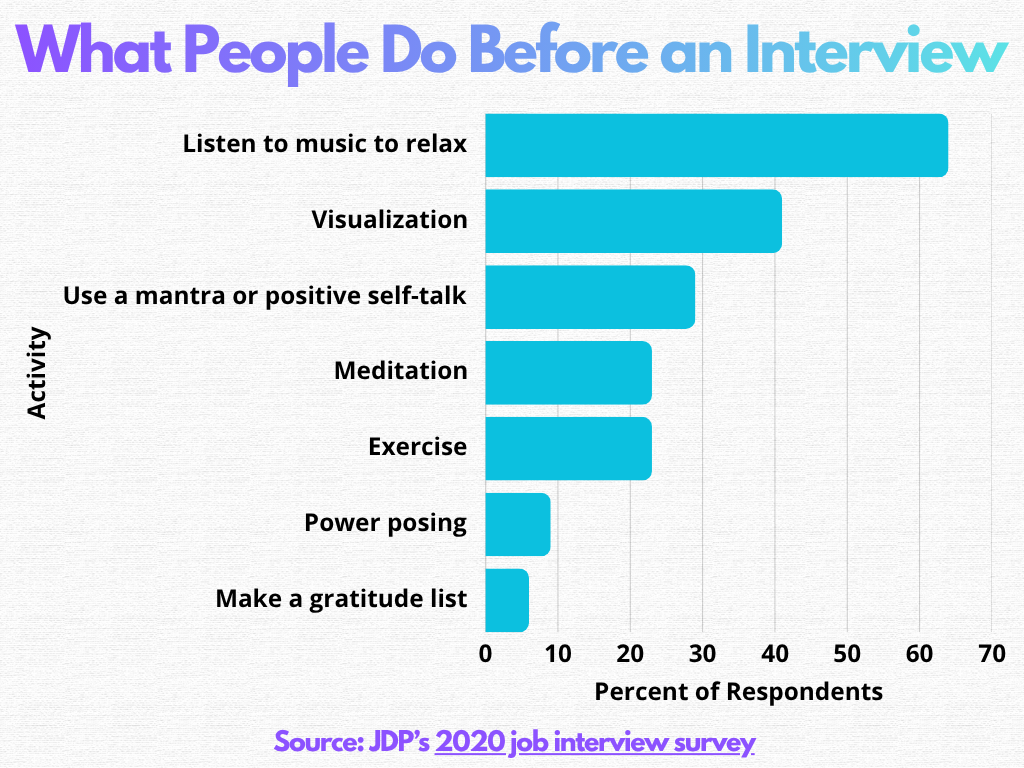
Even if it’s just for a few minutes, set aside some time before your interview to relax. Activities that people do include:
Listening to music
Meditating
Taking deep breaths
Exercising
Visualizing positive outcomes
Doing positive self-talk
Taking some time for yourself, rather than jumping straight into a job interview, can help you calm down. This makes for a less anxious interviewing experience.
I have anxiety. To relax, my go-to strategy is listening to music while deeply breathing. Usually I lie down and close my eyes during this, but sometimes my anxiety takes the form of fidgeting. That’s when I stand up and do stretches.
I also like to queue up everything I need for the job interview: the link for the meeting invite, my notes, a glass of water, and a notebook and pen so I can jot down ideas and questions during the interview. Having everything at hand soothes my mind.
Find what works for you. Mental preparation is a powerful tool to manage anxiety when interviewing.
Reserving extra time before an interview can get complicated if you’re job hunting while also working another role. But if you can set aside even 5-10 minutes to ground yourself, it has a positive effect on interview anxiety.
Speak Slowly
It happens to just about everyone: You’re in the middle of the job interview and anxiety starts bubbling up. There are ways to manage this situation as it’s happening.
Take a breath and speak slower. It’s easy to start talking quickly when we’re nervous. You could even take a pause and ask the interviewer if your answer needs any clarification. After all, job interviews are supposed to be conversations. What seems clear to one interviewer might not be to the next.
If needed, repeat the question that the interviewer asked before you launch into an answer. That can give you an opportunity to slow down and think of your response.
These quick grounding exercises could help steady your nerves during the interview.
Be Honest
Another strategy is to be honest about your anxiety. It doesn’t need to be a secret. It’s likely that your interviewer has gone through the same thing before and will be able to relate.
If you stumble over your words or your voice cracks, you can talk about it: “I’m a bit nervous because I’m excited about this interview.”
This kind of acknowledgement humanizes you. Most interviewers understand that job interviews can be nerve-wracking and appreciate that you’re being honest and self-aware.
Take a Moment After the Interview
I usually need to take a breather after an interview ends. Once I’m alone, I sit, draw a few breaths, and maybe watch a short video on YouTube to make me laugh. (I’m a big fan of skit comedy.) These activities break my mental tension.
Those of us with anxiety can often still feel it pulsing through our bodies even after an interview is over. So self-care is key. Do whatever activity makes you calmer and helps you come down from the interview nerves.
If you want to feel more prepared for your next job interview, we’re happy to help. Book a mock interview and get an hour to practice with a non-judgemental professional.